
About Status Health
Mapping Your Exposure.
Mapping Your Exposure.
The Mission Behind Status
Trace the journey from the early 20th century
to our promise to you and your health.
The Science
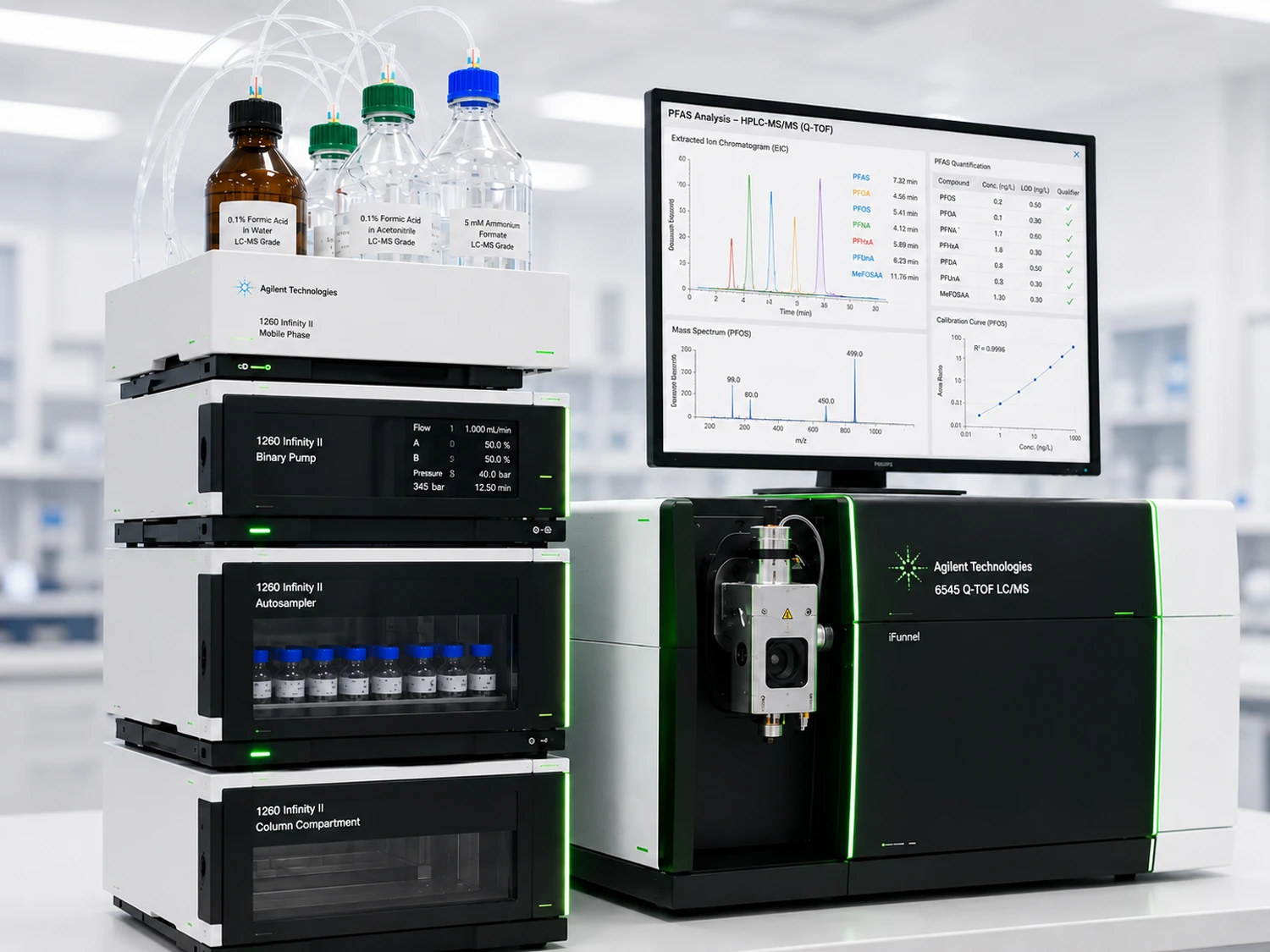
Lab-grade chemistry. Human-grade clarity.
Your sample is analyzed with mass spectrometry, the same technique used in leading exposure research at a CLIA-certified laboratory.
Each PFAS compound is quantified in ng/mL and placed in context against national exposure data, so your results are not just accurate, they're understandable.
Learn the science →
Your Dashboard
Results that actually mean something
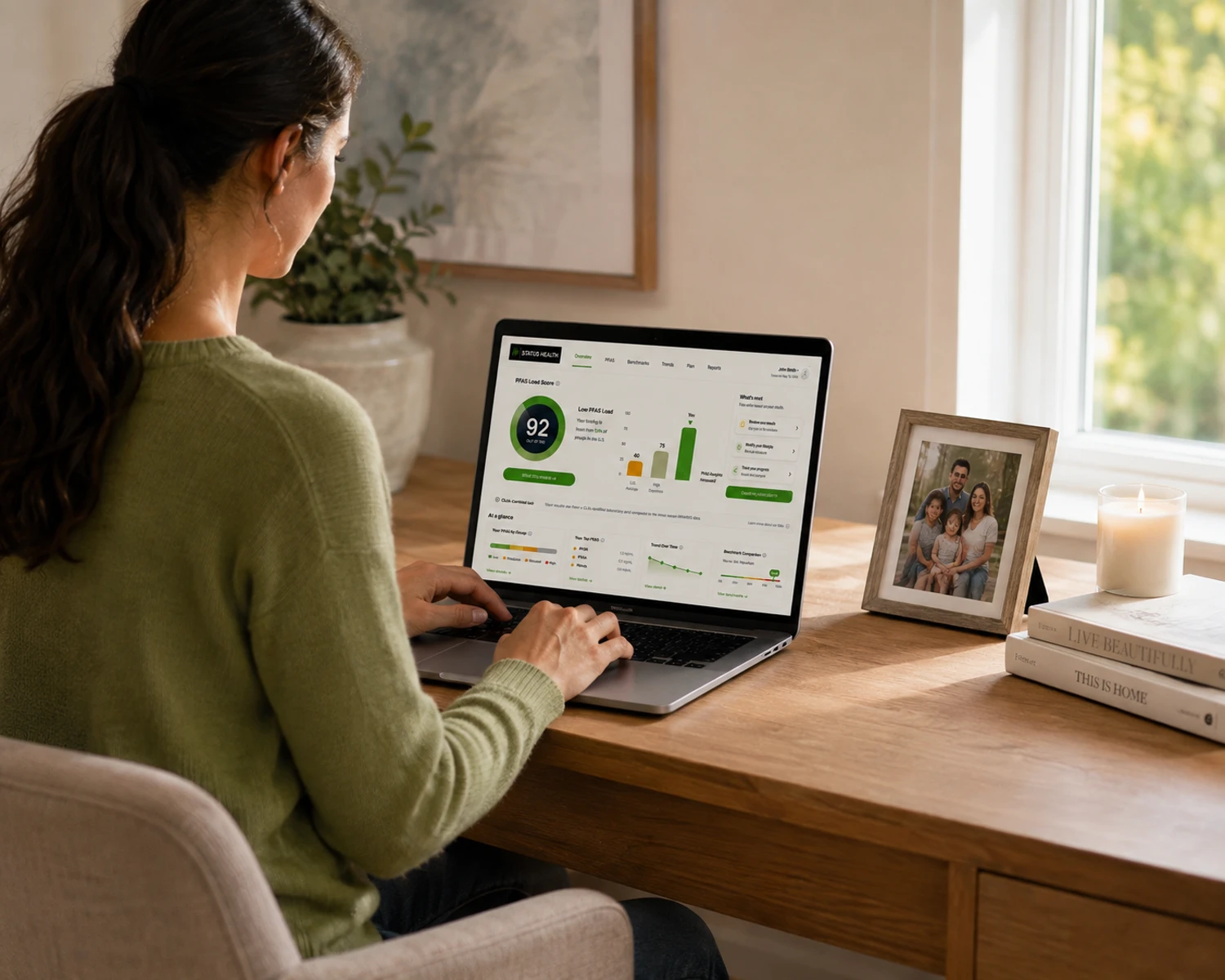
Most lab reports hand you a PDF of numbers. Status Health gives you a living dashboard that shows where you stand and what to do next.
- Your PFAS Load Score: one clear number, in context
- National benchmarks: how you compare to population data
- Trends over time: watch your levels respond to your changes
- A personal action plan: practical steps ranked by impact
Reference
Chemical Glossary
Every one of the 40 PFAS on the panel what it is, where it comes from, how long it lasts, and public sources. Filter, search and sort like a library.
Chemical Glossary
FAQ
Frequently asked questions
A PFAS blood test measures the concentration of per- and polyfluoroalkyl substances “Forever Chemicals” in your blood, reported in nanograms per millilitre (ng/mL). Because PFAS bind to proteins in blood and stay there for years, a blood level is the most direct measure of how much has actually accumulated in you, regardless of where it came from. It is the same kind of measurement the CDC uses in its national NHANES biomonitoring survey and the one the National Academies of Sciences, Engineering, and Medicine (NASEM) recommends clinicians offer to people likely to have elevated exposure.
Forty PFAS compounds across five chemical classes: legacy long-chain acids and sulfonates (PFOA, PFOS, PFHxS, PFNA, PFDA and their relatives), newer ether replacements such as GenX (HFPO-DA), ADONA and PFMOAA-type compounds, fluorotelomer acids and sulfonates (4:2, 6:2 and 8:2 FTS; 3:3, 5:3 and 7:3 FTCA), sulfonamide precursors (PFOSA, N-Me/N-Et FOSA, FOSAA and FOSE) and short-chain PFAS such as PFBA and PFBS. Every one is quantified individually a number, not just “detected”. The full list, with what each compound is used in and how long it stays in the body, is on our What We Test page.
Samples are analysed by liquid chromatography–tandem mass spectrometry (LC-MS/MS) at a CLIA-certified laboratory the reference method used in national biomonitoring. Each run includes calibration standards, isotope-labelled internal standards for every compound, method blanks and quality-control samples; a result is only released when all controls pass. Detection limits are in the low parts-per-trillion range, so the method can find a drop of water in an Olympic swimming pool. Reported values carry a measurement uncertainty of roughly ±10–15%, which is far smaller than the differences that matter clinically.
For PFAS, yes. Our method is validated for dried blood spots, and each compound is converted to a serum-equivalent value using published, compound-specific factors (about 1.35 to 1.88, reflecting how each PFAS partitions between red cells and plasma). The result is directly comparable with clinical reference ranges, the NASEM thresholds and NHANES population data without a needle in the arm, a phlebotomist or a cold-chain courier. Dried spots are also stable at room temperature, which is why the sample can travel by ordinary post.
Anyone who wants to know where they stand about 97% of Americans carry measurable PFAS. Exposure tends to be higher if you drink from a private well or a water system near industrial sites, airfields or military bases; if you work in firefighting, chrome plating, textiles, ski-wax or fluorochemical manufacturing; if you eat a lot of locally caught fish; if you are planning a pregnancy; or if you simply want a baseline before making changes at home. NASEM specifically recommends that clinicians offer PFAS blood testing to people likely to have elevated exposure.
A complete collection set in discreet packaging: a sterile upper-arm collection device (a gentle vacuum draws a few drops of capillary blood onto a collection card), lancets and alcohol wipes, a printed step-by-step guide with a QR code to a short video walkthrough, a specimen bag with desiccant, and a prepaid, tracked return mailer. Nothing needs to be bought, printed or refrigerated.
No. Most people finish in about five minutes, at home, on their own schedule. The device is pressed to the upper arm and does the work itself most describe it as a light pinch rather than a prick. The guide shows every step, the video walks you through it, and support is one message away if you have a question part-way. If a collection does not go to plan, a replacement device is sent free of charge.
Any time of day, no fasting needed PFAS levels do not change meaningfully hour to hour. We suggest collecting early in the week (Monday to Wednesday) so the sample reaches the lab without sitting over a weekend, and drinking a glass of water beforehand, which makes the sample flow more easily.
The collection is gentle enough for teenagers with a parent’s help, and there is no restriction in pregnancy in fact NASEM names pregnancy planning as a specific reason to know your level, because PFAS cross the placenta and are associated with lower birth weight and pregnancy-related hypertension. For children under 12, please talk to a paediatrician first.
Kits ship to all 50 US states with free tracked delivery, usually arriving in 2–4 business days. The return label is prepaid and already attached: seal the sample in the mailer, drop it in any USPS box or hand it to a carrier the same day, and track it to our lab. International shipping is not yet available.
Typically 7–10 days after your sample arrives at the laboratory (postal transit is usually 1–3 days on top). You get an email the moment your dashboard is ready. If a sample needs to be re-run for quality reasons we tell you rather than delaying silently.
Your dashboard opens with your PFAS Load Score: one number that summarises overall exposure and your percentile against the U.S. population for your age and sex. Below it you see the NASEM sum of seven key PFAS read against the 2 and 20 ng/mL thresholds that guide clinical follow-up; then every one of the 40 compounds with your level, the national comparison and what each is used in, so you can see where exposure is likely coming from; then a ranked action plan ordered by likely impact; and a printable summary written for your clinician.
A single 0–100 score built from your measured levels, weighted by how each compound compares with the CDC’s NHANES survey for people like you. Lower is better. It is designed to be trackable: retest a year later and the score shows whether the changes you made are working. It sits alongside, not instead of, the NASEM sum the score is for tracking, the NASEM sum is what clinicians use for follow-up decisions.
No. A result describes exposure, not disease. Large studies have associated higher PFAS levels with certain outcomes raised cholesterol, reduced vaccine response, thyroid changes, pregnancy hypertension and kidney and testicular cancer but an individual result cannot tell you that PFAS caused anything, and most people with elevated levels have none of these conditions. What a result gives you is an evidence-based starting point: which follow-up checks NASEM recommends at your level, and where your exposure is most likely coming from.
Because PFAS leave the body slowly half-lives of 3 to 8 years for the legacy compounds a retest every 12 months is enough to see a real trend after you make changes. Your dashboard keeps a retest clock and overlays each result so the direction is obvious. Retesting sooner than six months rarely shows a meaningful difference.
Your results belong to you. They are stored encrypted, shown only in your password-protected dashboard, and never sold or shared with employers, insurers or advertisers. Samples are identified by a specimen code, not your name, inside the laboratory. You can download or delete your data at any time from Settings.
No. You order the kit yourself, collect at home and receive your results in your private dashboard. The report includes a clinician summary you can bring to your doctor, written to the NASEM 2022 follow-up guidance, so a physician who has never heard of PFAS testing has what they need on one page.
Possibly. Many HSA and FSA plans reimburse laboratory testing, but eligibility varies by plan and some administrators require a Letter of Medical Necessity. We provide an itemised receipt with the information plans typically ask for; please check with your plan administrator before ordering.
Unused, unopened kits can be returned within 30 days of delivery for a full refund. If your kit arrives damaged or incomplete, or a collection fails through no fault of yours, tell us and we will send a replacement. See our Refund policy for the full details.
It’s about you
Start Today
Join the people who have chosen to see their Forever Chemical exposure clearly.
Order Your TestLC-MS/MS Mass SpectrometryCLIA-Certified LabYour Data, Protected