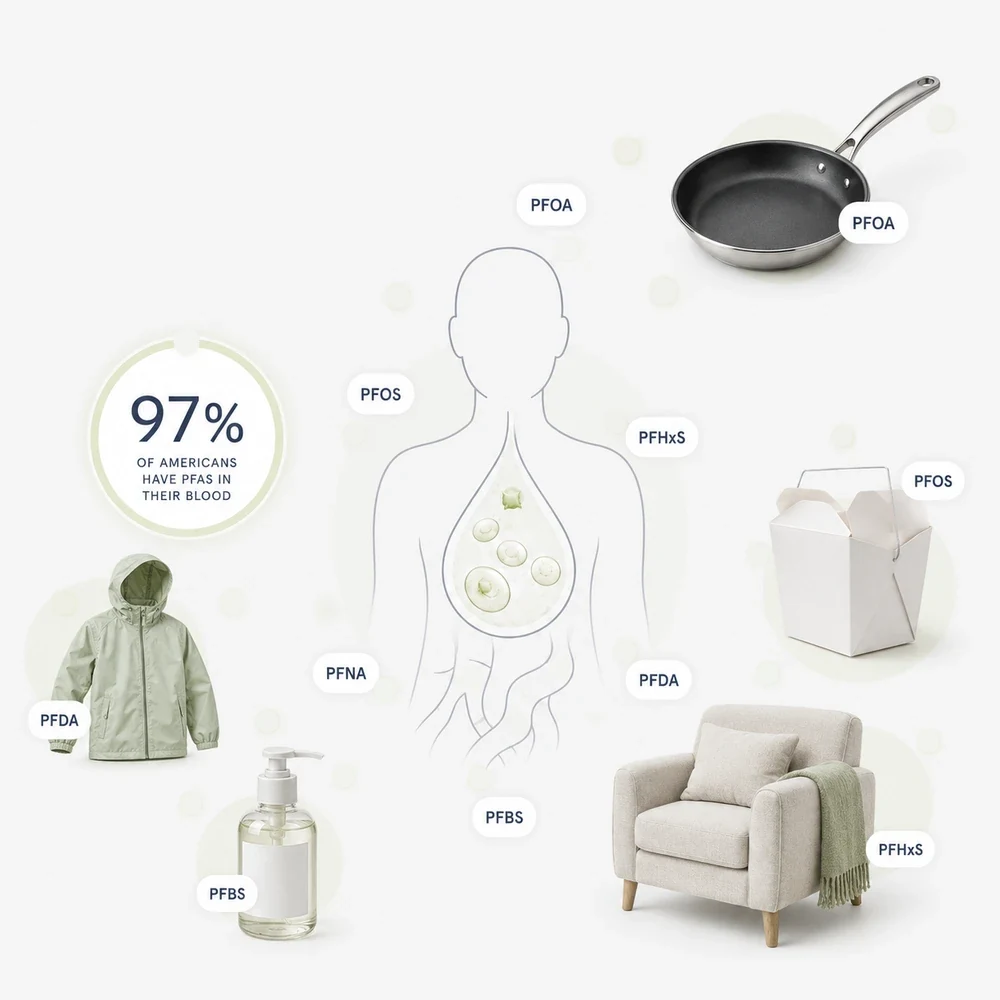
 97% of Americans
Nearly everyone carries them
CDC biomonitoring has detected PFAS in the blood of about 97% of Americans. The question isn't if you've been exposed, it's how much.
More detail →
At-home blood testing for Forever Chemicals, analyzed in a CLIA-certified lab.
With a clear report you can actually understand.
PFAS are man-made compounds used for decades in everyday products. They don't break down easily in the environment, or in you.
97% of AmericansCDC biomonitoring has detected PFAS in the blood of about 97% of Americans. The question isn't if you've been exposed, it's how much.
More detail →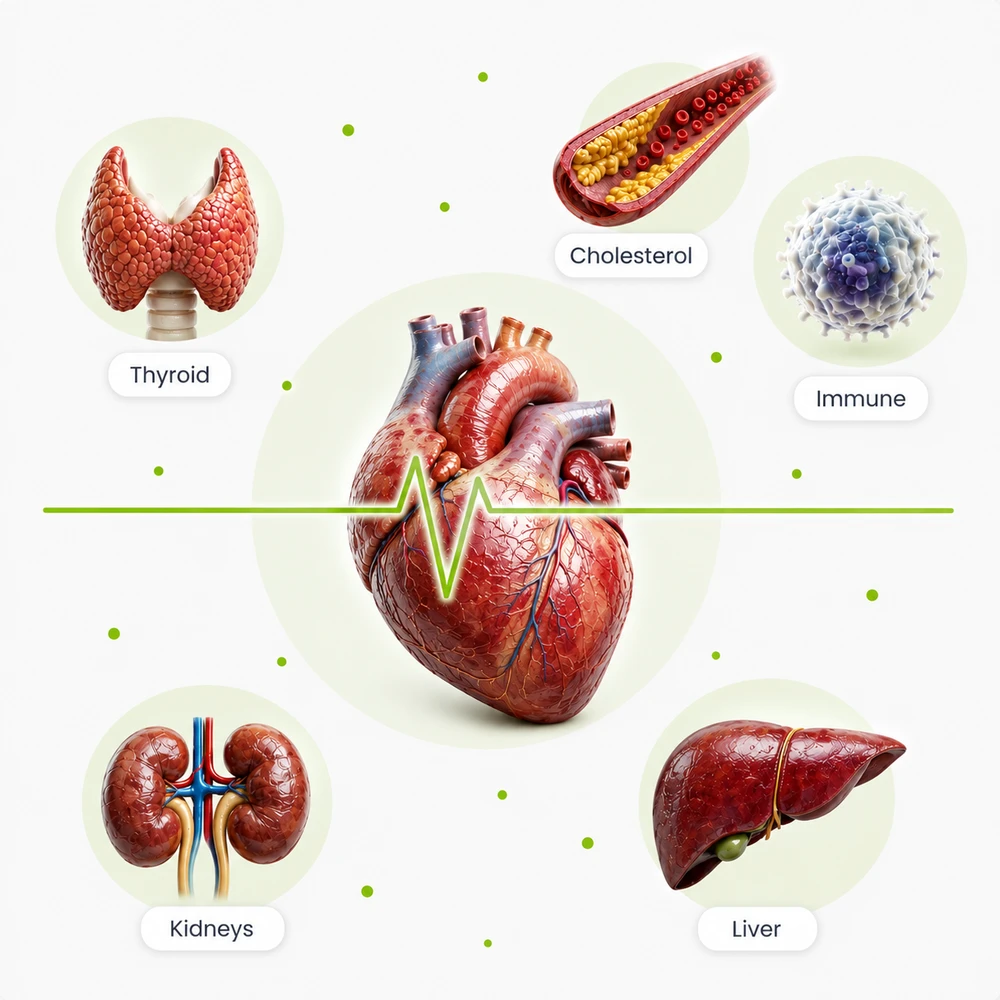 Peer-reviewed research
 has associated PFAS exposure with cholesterol, thyroid, immune, liver, and fertility-related effects.
See the evidence →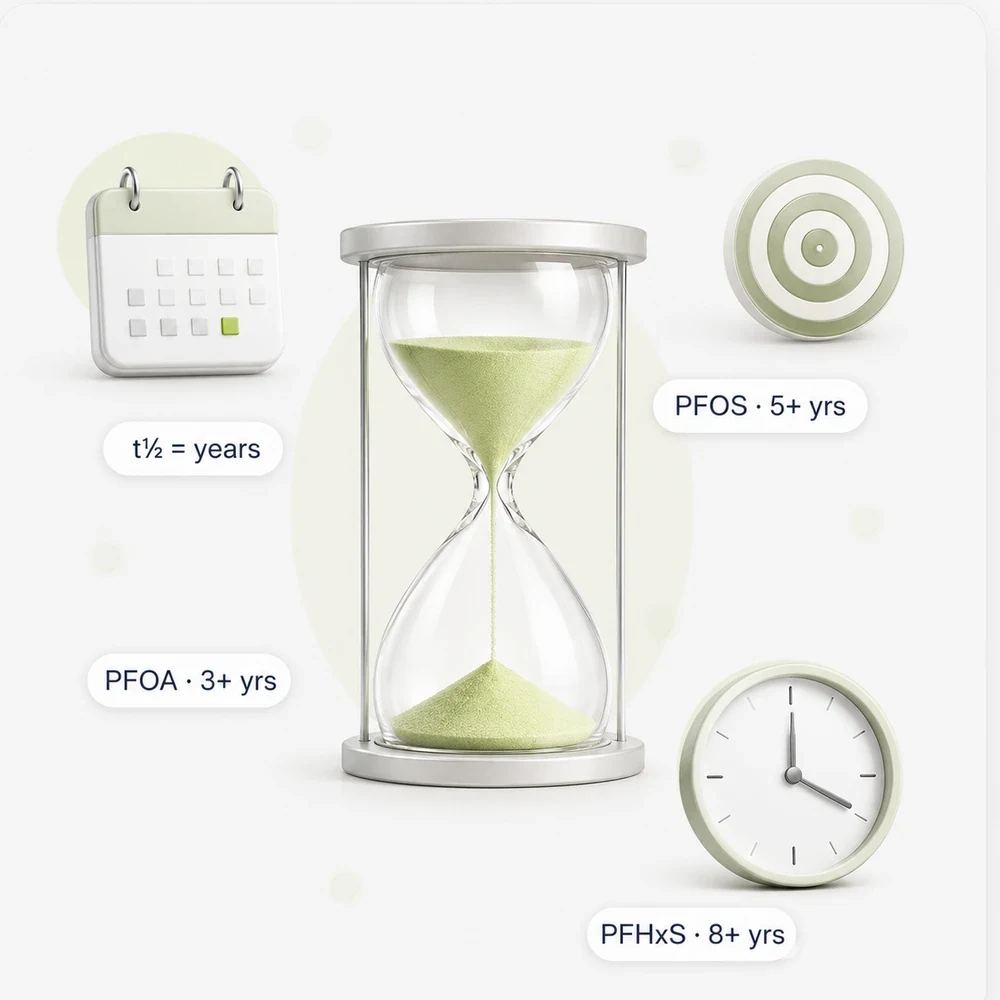 Half-lives of years
Some PFAS have half-lives in the human body measured in years. Knowing your levels is the first step to lowering them.
How half-lives work →Grouped by how long each one stays in the body from years down to days.
From cookware to cosmetics, everyday life exposes you to Forever Chemicals you cannot see, taste or feel.
Our lab test measures 40 of them in your blood so you can find your sources and take control of your exposure.
PFAS are detectable in the serum of essentially the entire population of industrialised countries.
Here is what 100 Americans look like.
Detection is the norm; it is the concentration that carries the information which is exactly what your report tells you.
Source: National Academies of Sciences, Engineering, and Medicine (2022), estimated from CDC NHANES 2017–2018.
Arrives ready to use.
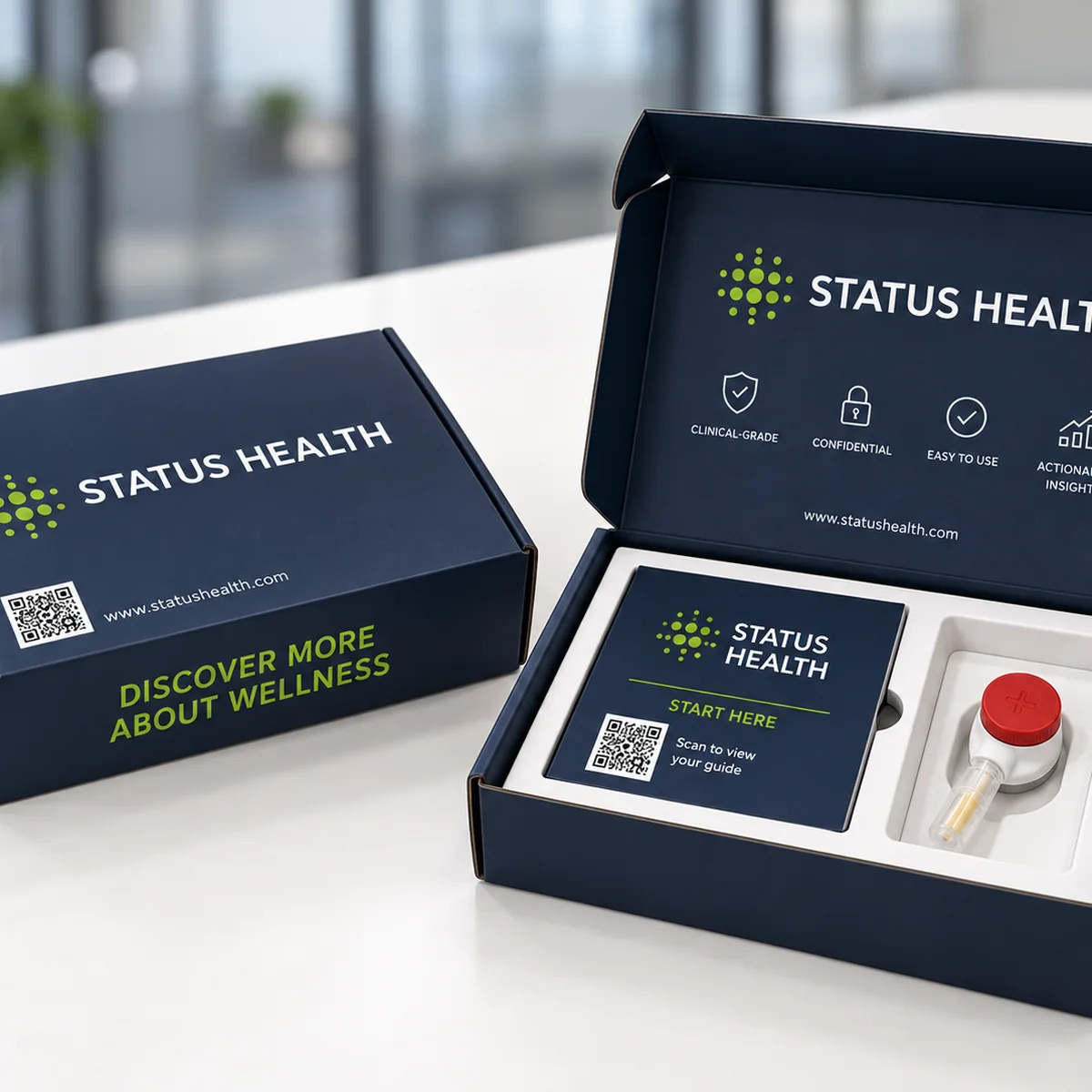
Five minutes, at home.
Research-grade precision.
Numbers you can act on.
Every step, explained in full.
Learn more about how it works →One kit. A CLIA-certified analysis. A dashboard that turns your results into a plan.
Since 1999 the CDC has measured PFAS in the blood of a representative sample of Americans every two years. Detection is almost universal, so the number that matters is not whether you carry PFAS it is how much.
Thresholds: National Academies of Sciences, Engineering, and Medicine, Guidance on PFAS Exposure, Testing, and Clinical Follow-Up (2022) read it free at the National Academies. Population figures estimated from CDC NHANES 2017–2018. This is exposure information for education and is not a diagnosis.
Everything you need arrives in one discreet box and everything you need to send it back is already inside. There is nothing to print, buy or arrange.
Shipping is included in the price of the test. If a kit is damaged in transit, we replace it at no charge.
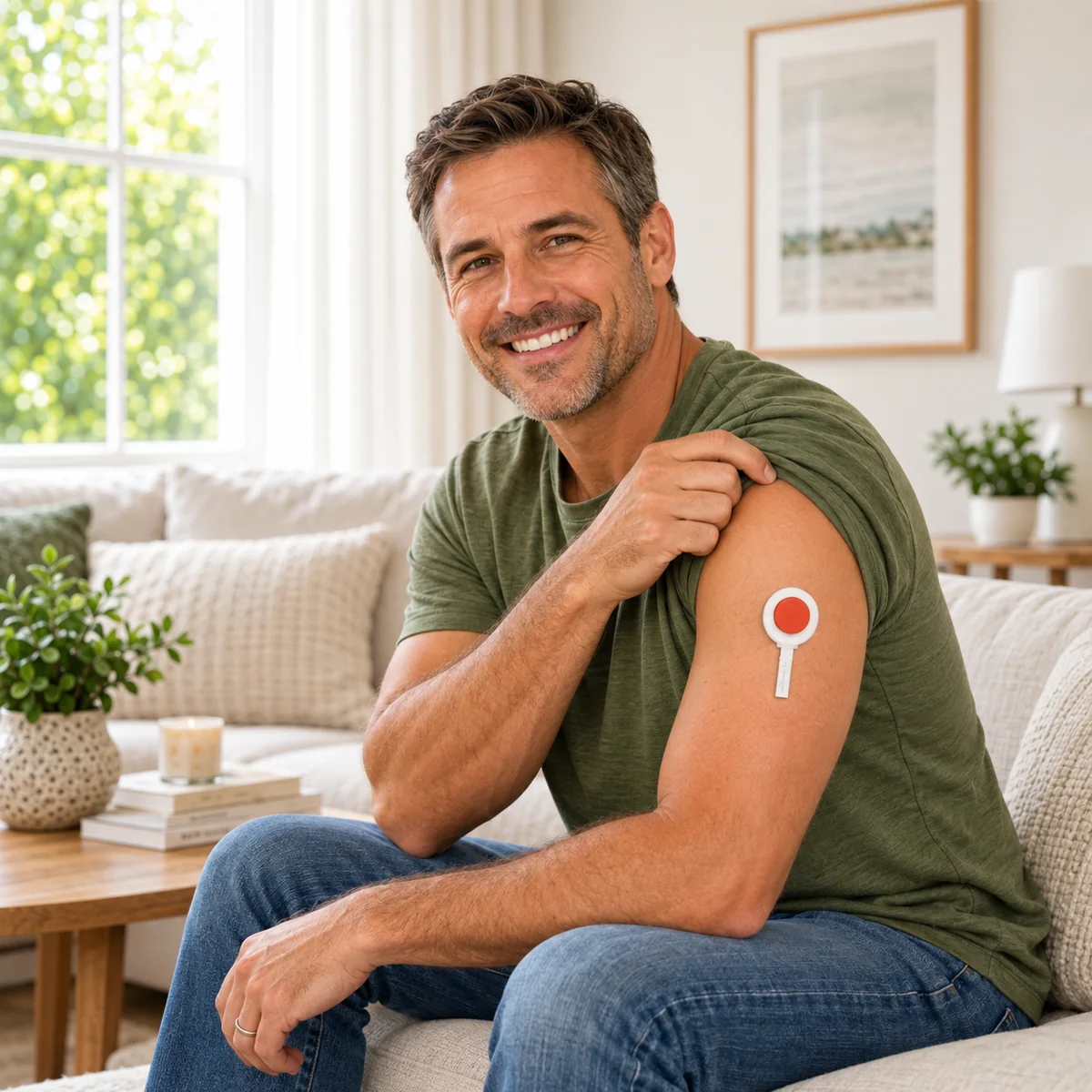
The sample is a few drops of blood collected at home in about five minutes, whenever it suits you. No appointment, no waiting room, no needle in the arm, no phlebotomist.
If a collection does not go to plan, a replacement device is sent free of charge.
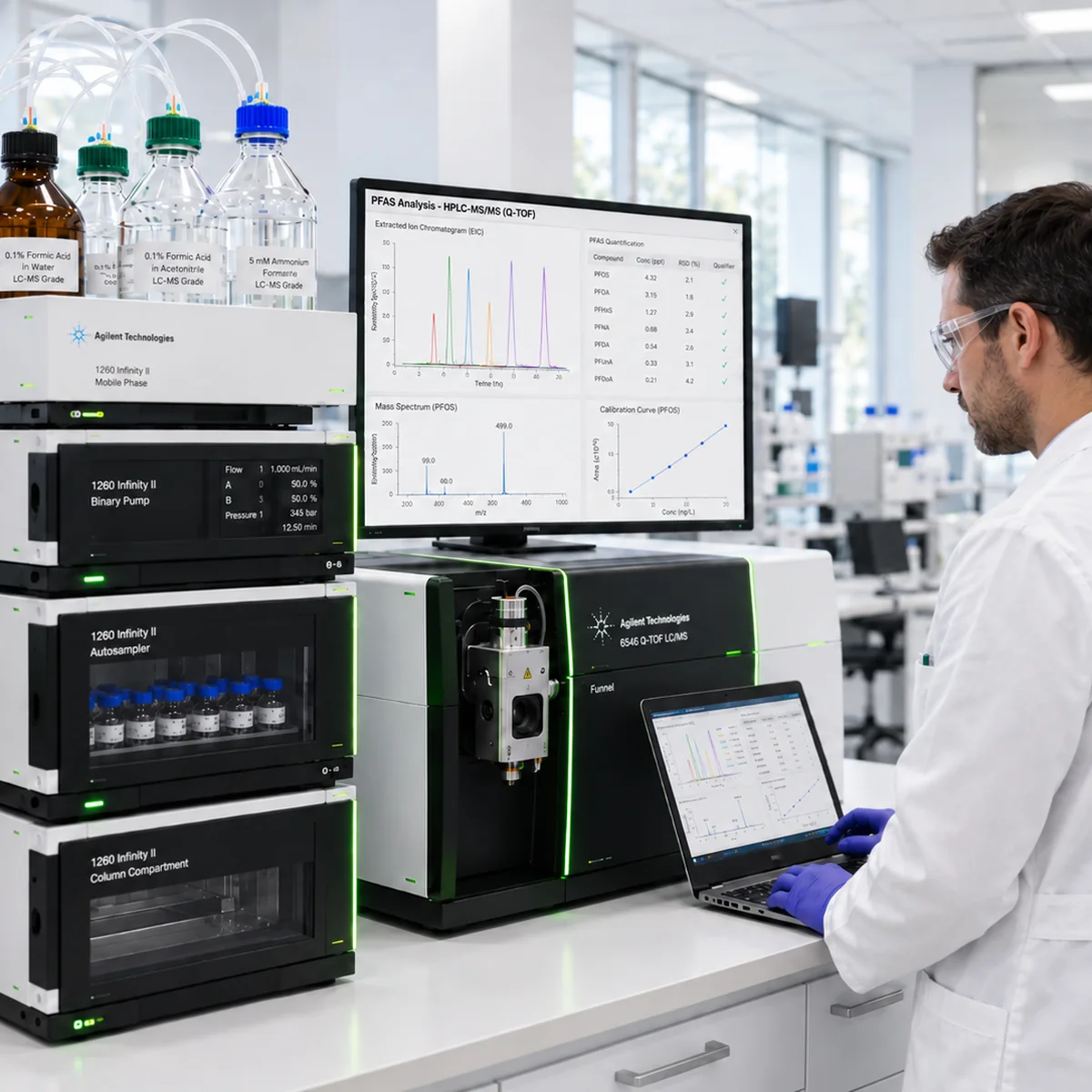
Your sample is analysed in a CLIA-certified laboratory by liquid chromatography–tandem mass spectrometry (LC-MS/MS), the reference method used by the CDC for PFAS biomonitoring. Every compound is quantified, a real number in nanograms per millilitre not just flagged as present.
Results describe exposure. They are not a diagnosis and do not tell you whether PFAS caused any specific condition.
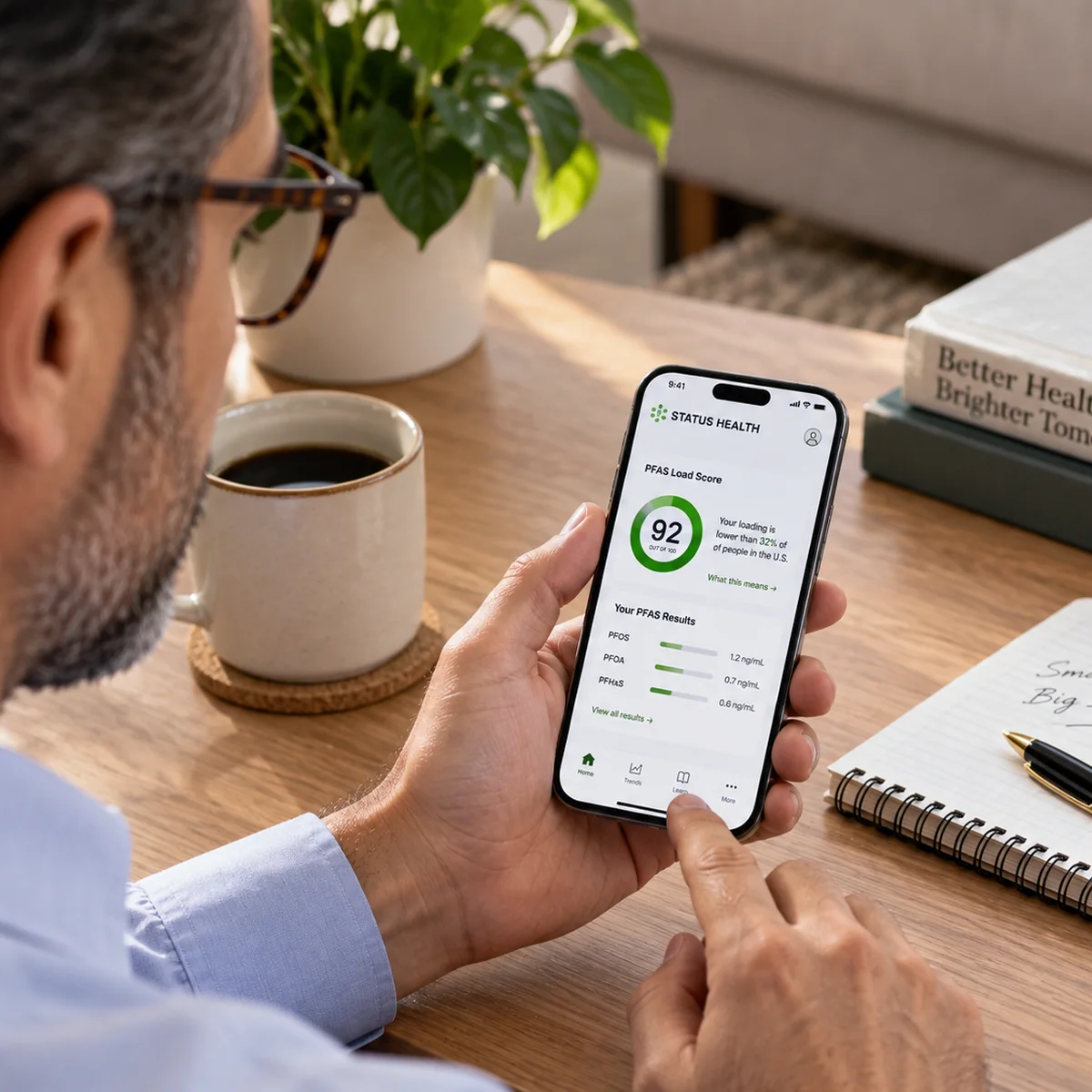
Your results are ready 7–10 days after your sample reaches the laboratory. They land in your private dashboard not as a generic PDF with every number explained in plain language.
Timing starts when the lab receives the sample; postal transit is usually 1–3 days on top. You are emailed the moment results are ready.
Since 1999 the CDC has measured PFAS in the blood of a representative sample of Americans every two years. The result has barely changed: about 97% of people tested have measurable PFAS.
Source: CDC National Health and Nutrition Examination Survey (NHANES) biomonitoring, 1999–2018. Percentages describe the population, not any individual; your own level can only come from your own test.
In 2022 the National Academies of Sciences, Engineering, and Medicine reviewed the human evidence and sorted it by how strong it is. This is their grading, not ours.
Source: NASEM, Guidance on PFAS Exposure, Testing, and Clinical Follow-Up (2022). “Associated with” means observed together in studies of people; it is not a diagnosis, and a result cannot tell you whether any effect will happen to you.
A half-life is how long your body takes to clear half of a chemical. For the long-lived PFAS that is measured in years, so what you absorbed a decade ago is still partly with you.
Half-lives are published human estimates (ATSDR and peer-reviewed cohort studies); ranges vary by study and by person. Only compounds with an established human value are listed. See all fourteen on the timeline ↓